Tuesday, June 15, 2010

Zombie Girl: The Movie


Zombie Girl: The Movie should be mandatory viewing for any children (particularly female ones) who want to make movies. Its focus is on 12-year-old Emily Hagins and her experience making her low budget zombie film titled Pathogen, and its message is universal when it comes to film making no matter your age. So, yes, if you're over 18 you'll still enjoy this, unlike the Transformers sequel.

Hagins' tenacity is something anyone who is passionate about anything can understand. The fact that she is hell-bent on making a zombie flick before she can drive could be considered cute by some, but those of us who love film can't help but think we may be watching a future star director in action. I haven't seen the final product of her labor, and I doubt it's a perfect or even a genius film, but I can tell that if she sticks with it, she will be making stuff worth watching.

But that's just a small part of this documentary.

If you've ever watched those DVD extras that show how low budget films are made, you will not be surprised by what you see here. There are all the usual problems: not enough money or time; actors not taking things seriously; not getting the right shots; equipment problems and so on. What makes all of this a bit more stressful, however, is that Hagins' mom is directly involved with the film, too, and sometimes exerts a little too much influence over what her daughter is trying to do. Imagine what Duel would have been like had Mama Spielberg been on set barking orders over her son. Yeah, it's not pretty.

If every director had Hagins' drive and desire, we wouldn't be saddled with crap like Valentine's Day. And that's the main reason we should hope she continues to make films. She'll only get better in time, and this documentary will hopefully help her get the exposure she very much needs. Let's pray she stays on the right track.

Monday, May 31, 2010

I Killed a Girl. It Was No Accident (aka Good-Bye, Dennis)

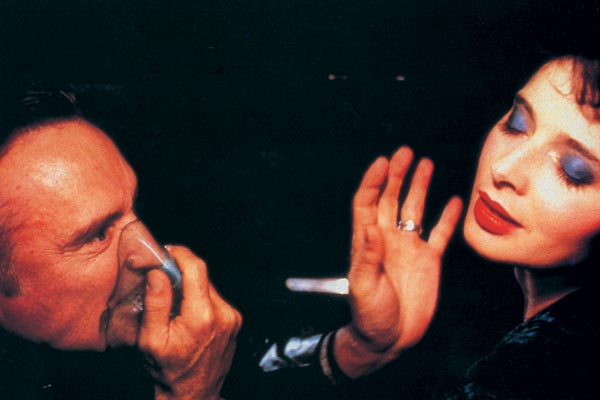
Dennis Hopper.  Dead.  We lost a good one.

Hopper starred in his share of shit.  That can't be argued.  He was brilliant in many films, however, and two of those were Blue Velvet and River's Edge, which also had Crispin Glover in it.  (It was also Keanu Reeves' best movie.)  Imagine that.  Hopper and Glover together in a film that was this mass of kinetic, drug-fueled mania.

Hopper also starred in The Texas Chainsaw Massacre 2, but his role could have been played by anyone.  Bill Moseley made that film.  Hopper was fun to watch in it, however, as he was in most things he was in.  Well, maybe not Super Mario Bros., where he played King Koopa.  A career low point for any actor, I'm sure.  You can't ignore that ... as much as you want to.  He made some questionable choices.  But the ones that weren't such a stretch of intelligence were almost sublime.


Blue Velvet is one of David Lynch's best films, and a great deal of its success is due to Hopper.  The strange gas he inhales.  The insane screams.  Screwing Isabell Rossellini with scissors while saying, "Baby wants to fuck."  Inspired.  Show me a better film about small town life in America.  I dare you.

Hopper died the same week Gary Coleman, who lived in a locker in On the Right Track.  They don't really compare, but it seems somewhat disrespectful that Coleman would go the same week ... even if he did go first.  When you lose a legend, you just let anyone else go the same week.  It would be like that guy from Creed dying three days before Dio.  It just isn't right.

I wouldn't consider Hopper to be a legend, but he was close.  He was a work horse, as is witnessed by the amazing amount of stuff he's been in.  He was at his best when playing the madman.  He did not stretch himself all that much, but he delivered when he was in the right role, and that's better than 70% of the actors out there now. 

My three favorite Hopper films, River's Edge, The Texas Chainsaw Massacre 2 and Blue Velvet all came out in 1986.  It was a good year for film.  I end this with a quote from River's Edge, where Hopper plays Feck, an insane guy who lives with a love doll, if memory serves me correctly. "I killed a girl, it was no accident. Put a gun to the back of her head and blew her brains right out the front. I was in love."

That's a great quote.  Fits just about any situation.

Good-bye, Dennis.     

Saturday, May 8, 2010

The Iron Man 2 Problem

I saw the first Iron Man and liked it.  I like the character (always have) and thought Robert Downey, Jr. did a fine job bringing it to life.  The movie had some dumb Hollywood moments, but it was a Hollywood movie so that was to be expected.  When I started seeing trailers for the sequel, I made plans to see it opening weekend or the weekend after if I didn't feel like dealing with the crowds.

Somewhere along the line that changed, and it had nothing to do with the movie or crowds.  It had everything to do with me.

I went from wanting to see the sequel to being totally ambivalent about it.  I didn't even really think about the reason why until someone asked me if I were going to see it.  After some soul searching, I think I figured it out.

It's all about my mood.

Right now I'm over stressed to the point where headaches are a daily event and sleep is some elusive pipe dream.  I am in a foul head space, and I have no desire to see something that is just pure entertainment (though I think I could benefit from it).  I realized all of this when Mario Bava's La Maschera del Demonio arrived in the mail and I was absolutely giddy at the prospect of sitting in the dark and taking that classic in.

I don't want happy right now.  I want something that reflects my state of mind, and a Marvel superhero ain't it (no matter how much I like him). 

Maybe my emotional state will change in a day or two and I'll find myself in line, ready to enjoy the movie up until it's final act, as is usually the case with superhero movies.  Maybe I'll just wait for the DVD, like I did with the first one.  Maybe I'll never see it and just watch my usual suspects of emotional grind on steady repeat. 

If you go, I hope you enjoy it.  Me?  I'll be watching a spiked metal mask be hammered into Barbara Steele's face and feeling every minute of it ... and that smile won't be wiped off my face.  

Tuesday, May 4, 2010

It's Only a Movie

When remakes first started to be the thing for Hollywood to do instead of finding original stories, I figured there were a handful of films that Hollywood would never dream of touching.  Cannibal Holocaust and The Last House on the Left were two of those.

Obviously I was wrong on the latter.

I haven't seen the remake of the Wes Craven classic, as I'm not a fan of remakes or even the original film in this case, but from what I hear from people who have seen both is that the remake is disturbing but nowhere near as bad as the original.  So what is the fucking point?

The Last House on the Left is, for better or worse, considered a hallmark of cinema nastiness.  Why would anyone attempt to remake it if they couldn't top it?  It's not supposed to be a pleasant film, so why not go for broke? 

I know the real reason remakes are made is to quite simply cash in on the original film's name and history.  That can work with something like Halloween.  With Craven's rape/revenge film, however, it doesn't seem like a name and history you'd want to cash in on unless you were going to make it better.  After all, the original film's fans are smart enough to know that Hollywood is not going to make a movie like the original just out of fear of the reaction it would produce, so those fans are lost.  New viewers, who watch anything that comes out, will go simply because it's new, so why not try a new film all together that is in the vein of the original (with a different title) and try to rope in both crowds?

The way I see it, the only extra audience that the remake could have received is the crowd that has knowledge of the original film but never saw it because they were frightened of it, but now they know that Hollywood would never put out a film that actually challenges viewers.  Therefore, they feel safe going to see the new film.  They won't be challenged, they won't see anything that sticks with them for years, they won't leave the theatre shaking. 

Perhaps someday we'll see films go back to that wild, free-for-all of the period from the late '60s to early '80s, but I doubt it.  The film, art, economic and cultural climate has changed so much that those days seem beyond reach.  Hollywood should remember that and stop trying to embrace that era without any of the trappings that made it so great.  Not only is that cowardly, but it's a total waste of time on everyone's part.

And if Cannibal Holocaust gets remade with Nic Cage I just may shoot someone.  

Sunday, April 25, 2010

The Little Girl Who Lives Down the Lane


As a child, The Little Girl Who Lives Down the Lane freaked me out.  It stars a young Jodie Foster (who considers it one of her worst films -- it's not as she has done far crappier stuff than this) and Martin Sheen as a pedophile.  Foster is hiding a secret and bumping people off with poison.  Sheen is trying to get into her pants.  He's creepy.  She's creepy.  The entire movie gave me chills.  (It came out in 1977 in America and I probably saw it a year or two later, so I was about nine when I first watched it.)


While hardly a classic, this Canadian film still delivers, though I am far less disturbed by it these days.  Since it was the 1970s, it's not surprising this film was made (and I could actually see it being remade now, though not well), it still seems like an anomaly of cinema.  Maybe it's because of Sheen, or a brief nude scene with Foster (well, really Foster's older sister in real life because Foster didn't want to appear nude in the movie), but watching the film always gives me the feeling that something is a little ... off.

Those expecting a full-on horror movie will be disappointed.  This is more of a psychological thriller (despite how it was marketed when it came out), and I will say that the subject matter makes it quite effective as such.  And despite Foster's misgivings about the film, I think that any kind of serious study of her career will find this to be one of her more compelling works.

At the very least it is world's better than Nell or Maverick.  

Monday, April 12, 2010

The Apprentice (aka Mismarketing Erotica)

The Apprentice, also known as Fleur Bleue, was released last year in a special edition.  It was sent to me to review or Film Threat, though I'm still up in the air on whether or not I will submit it.  While the film looks good and is interesting, what I find odd is how it is promoted.

If you ever wanted to see a young Susan Sarandon's breasts, then you would think this is the be-all-end-all of such sightings.  In fact, if you simply read the back of the DVD box for this 1971 film, you would think this is some kind of erotic vehicle for Sarandon.  It has sex, it has Sarandon, but it is really about so much more.

I'm not reviewing the movie here regardless of whether or not I submit it to Film Threat, but I am complaining about Somerville House's willingness to focus on one aspect of the film in order to sell it.  Especially since it's Sarandon, who has never been the most erotic of actresses.  In fact, I would say her fans would be much more inclined to buy this film if a more fitting description were placed on the DVD box along with the fact that is one of Sarandon's first roles.  The press kit that came with the film did a fairly decent (though not spectacular) job of describing the film's place in cinematic history, so why not the stuff the consumer gets to see?  (Honestly, the film's actual story is far better than the implied one, but I'm also a fan of crime films and ones that look at the sociological aspects of clashing ethnic groups -- the French and the English in Canada in this case).

Sarandon is an interesting actor in her own right.  I'm not a huge fan, but I know quite a few people who are, and they would not be sold on this movie as an "erotic" Sarandon film.  They don't think of her as an erotic star, period.  For many of them, Thelma and Louise is pushing it.

I understand that companies have to sell movies, but promoting a film as an erotic Susan Sarandon piece is like promoting a film for being an erotic James Gandolfini movie.  Granted, I'm sure a lot of women find him sexy, but most people want to see him play a tough guy.  They don't care about seeing his ass.  It just makes me wonder: Who the hell was Somerville marketing this movie to?  Young guys?  They don't want to see Sarandon naked?  Sarandon's fans?  Ditto.  Older women?  Nope.  So who?

And maybe now we know why the special edition of this film was meant with little fanfare.   

Tuesday, March 9, 2010

Throne of Blood

Every country has one director who, according to cinemaphiles, is the best representation of the region's film making.  Italy has Dario Argento, and Japan has Akira Kurosawa.  Kurosawa's films, much like Argento's, have inspired directors all over the world, and one of his best films is Throne of Blood, the English title of Kumonosu-jō, the translation of which is actually Spider Web Castle.

Throne of Blood, like many of the films Kurosawa is known for, is a samurai film.  It's not your ordinary samurai film, however.  No, this one is based on Macbeth.  If you're wondering how well Shakespeare's work can translate when the characters are thrown into feudal Japan, I can tell you.


Damn good.


If you've seen Throne of Blood it is doubtful you'll ever forget its images.  The fog.  Those eerily moving trees.  The ghost.  One scene that has always stuck in my mind was the death of Washizu (Toshiro Mifune), which is the Macbeth role.  Washizu is killed by his own archers in a scene that had me wondering just how it was pulled off.  To me, it looked like those were real arrows being shot at him and sticking into the walls next to his terrified body.  But, of course, this was movie making, and while the special effects weren't spectacular in 1957, I knew they could be used to create a scene where it looks like real arrows are being shot at an actor.


Except in this scene it was real arrows being shot at an actor.  The look of fright on Mifune's face?  Real.  Brilliant.  Can you imagine how you would feel if your director told you, "Oh yeah, we're shooting real arrows at you.  Action!"


To quote Sid Haig as Captain Spaulding, "Shit the bed!"


I'm not a fan of Shakespeare, but I do like Macbeth.  I like this film even more, though.  In my opinion, it actually works better than Shakespeare's work.  It's moodier, the language works better, and it is, quite honestly, more interesting.  I find Shakespeare's work to be overrated, despite the oft cited cultural significance.  Much like The Beatles, people think they should like Shakespeare, so they say they do.


Kurosawa was a master.  This, like Seven Samurai and Ran, was one of his masterpieces.  Fifty years from now this film and its director will still be inspiring filmmakers whether directly or indirectly (like those who get their inspiration from George Lucas, who was heavily influenced by Kurosawa).  There are only a handful of directors who can claim that, and Throne of Blood shows why Kurosawa is one of them.

Friday, March 5, 2010

Ils

If you are interested in my review of Ils, you can click on the link below.Check out my recently published content on AC:

Ils: A Vision in Terror

Saturday, February 13, 2010

Now That's a Knife

Wolf Creek.I like movies that toy with you.  You know, the ones that get under your skin and string you along.  The payoff has to be worthy of that tease, though, or else I get really pissed off.  Wolf Creek was one of those films.  It wasn't nearly as good or suspenseful as Haute Tension, but it got the job done.  It spent about forty-five minutes establishing the characters, which many consider to be the kiss of death in films like this.

And then the terror started.

I've always liked movies where the protagonists aren't smarter or more resourceful than the antagonist, and they don't get away.  I like that because it's closer to real life.  It gives the film a sense of despair and dread. 

When a bunch of dumb-ass teenagers can take down Jason Voorhees, how scary can he be?

In Wolf Creek it is the little touches that make the film.  The footage found on a video camera the killer has in his trophy room, what he has hanging in his barn, the way the killer talks about his old job -- all those things not only add an air of realism, they work to make the film more effective for the astute viewer.  It's obvious that some care went into making the film. 

The fate of the characters is in the air the entire time in Wolf Creek.  You can't honestly say you know who will live and who will die, and that sense of uncertainty is brought about by the way the film effectively toys with its audience.  There are far too many films that you go into and ten minutes later know exactly how it will end.  When a film can keep you on your toes, well, you need to respect that

There's no greater cinema crime than a boring, predictable film.  It insults viewers (who seem to enjoy boring, predictable films in huge number) and wastes their time.  It also says that the filmmakers don't have enough confidence in their skill.  They would rather go for the tried and true than take a risk.

I'll take the risk takers any day.  Because even when they fail they do it on their own terms in (often) wild, unpredictable ways.  Everything else is just painting by the numbers  

Saturday, January 30, 2010

Miramax Is Done

Kevin Smith put it best when he said he was "crushed" to see Miramax "pass into history." The studio gave Smith his start with Clerks and gave audiences tired of Forrest Gump and alternative in the form of a Royale with Cheese.. Now Disney has closed its offices, consolidated it and stated it wasn't closing it down entirely.

Sure sounds like it, though.

Miramax, for better or for worse, will forever be known as the company that brought independent films to a mainstream audience. That covers the good and bad, but the end result was really a positive one. It gave people who were tired of blockbuster nonsense a reason to leave their houses and actually go to the cinema, and for that I will miss it.

I didn't love everything that came out with its logo, but I understood and respected the spirit of the mission ... most of the time. Miramax had its faults (which multiplied when it started getting involved in that blockbuster nonsense I mentioned before), but you can't ignore what it did for American cinema.

Is it gone? It's gone enough. But its legacy will live on.

Thursday, January 28, 2010

Film Threat Sold!

Film Threat has been sold by Chris Gore to former editor Mark Bell. If asked, I shall return because it is sans Gore! Woo-hoo!

Sunday, January 17, 2010

What Ever Happened to Film Threat?

If you've tried to access the site you may have noticed it's not working and hasn't been for months. I've written for the site for years, and I've had my ups and downs with it and its head honcho Chris Gore, but I'm done ... even if the site comes back up.

Gore used to be a total cheerleader for independent cinema, though he wasn't afraid to call it out (along with mainstream Hollywood), but as of the past few years it seems that independent cinema has taken a backseat to major studio releases, porn stars and G4. The website still did its best to promote independent cinema, but Gore seemed like he didn't care.

(I have some personal issues with him, too, and how he went back on his word on something, but that's not the scope of this post -- though it started swaying my opinion of him quite a bit.)

I remember first realizing that Gore was no longer one of the spokespeople for indie cinema when he went on G4 and gushed about how great it was that Iron Man was now out on DVD, but made no mention of any of the indie films out that same day, including the second Amateur Porn Star Killer film, which Film Threat helped put on the map (through my interviews and reviews). This controversial film series rated not even a mention by Gore, and I found that sad. Not to say he had to, but it was important for indie cinema since the first two films broke records as being the most inexpensive films to make that ever saw national distribution.

Film Threat helped the careers of many filmmakers and was the only site that reviewed a lot of these movies. Wall Street Journal even called it one of the top five movie sites in the country. Just on my end I helped bring attention to the Amateur Porn Star Killer series, Hacks, and Failure, just to name a few. Now the site is down with no word of when or if it will ever go back up. It actually seems unlikely it ever will return at this point.

What that means is all those reviews, all those interviews, and all those columns (I did "Excess Hollywood") are now lost unless other people posted them elsewhere. The links are all dead, which reall screws up my other blog, Published and Unpublished Works. Film history has been lost, and I don't think Gore cares. He is more interested in making petty jokes with Olivia Munn and getting his picture taken with Sasha Gray. Nothing wrong with either thing, but sell-outs don't get a lot of respect from me, and I think he has become the very definition of the word.

Eventually people will tire of him and he will return to Film Threat, most likely with big promises (like he made to me). I won't be on board this time, though. If some of the people associated with the site break out and do something on their own, I'd be happy to contribute, but if Gore is at the helm I'll just do my own thing.

As of now I have a box of movies I've been waiting to review for when the site came back online. The reviews will run here and any other place that wants them.

What ever happened to Film Threat? I don't know for sure, but I think it has a lot to do with one person's fascination with themselves all while losing sight of the bigger picture.

Monday, January 4, 2010

A Slasher Classic Gets the Anniversary Treatment

Here's a link to a news item I did on the upcoming 25th anniversary edition of The House on Sorority Row. Enjoy.


Slasher Fans Rejoice! House on Sorority Row 25th Anniversary Edition DVD to Be Released

Friday, January 1, 2010

The Naked and the Dead

Seeing females naked on the big screen is fairly commonplace. Males is a whole other story. Harvey Keitel, pictured here, appeared sans clothes in the controversial Bad Lieutenant from famed director Abel Ferrara, the man behind Driller Killer and other assorted films. Bad Lieutenant caused controversy for all sorts of reasons -- the scene with the teen girls, the drug use and so on. But it was the nudity that caused quite a few people to get upset.

The film didn't shy away from the controversy. As you can see from the art here, the nudity was not hidden away from unsuspecting viewers. This bit of poster and DVD art, however, is what most people are used to seeing. Gun? No problem. Penis? Big problem.

The nudity in this film is essential. It's all about character change. It's a moment that could have been done with Keitel in clothes but would not have worked nearly as well. The fact that the film was brazen about it upset people. Hell, I remember people being upset about the chainsaw chase scene in American Psycho, and the nudity in that wasn't even close to bit in Ferrara's film. . Yes, it is intense (any naked guy chasing you is intense), and if I recall, you do get to see a bit of penis, but it still isn't nearly as emotionally overbearing and yet it still caused problems. (Both films were actually fairly controversial in their own right, but only Ferrara's use of nudity gets mentioned in the controversies. The controversy in the Christian Bale film is relegated around violence.)

Male nudity is always going to make American viewers uncomfortable for one reason or another. "Heterosexual" men will claim they aren't gay, so that's why they can't watch it (though any man comfortable with his own sexuality should be able to see another man naked with zero issues). Women, on the other hand, think turn about is fair play, but they often admit to some squeamishness, too. Perhaps it is solely because it is seen so rarely. Maybe it's something else. I don't know. I do know that there should be more of it in the right context (or even not in the right context -- it's up the director to decide that). Male nudity is powerful when done properly. And besides, if you do it in a high enough profile movie it's like automatic publicity these days.

Ferrara, exploitation guru that he can be, wasn't doing it for that purpose. He was making a statement. He succeeded. The fact that the impact has lasted this long (and talk to anyone who saw the film and doesn't like it, and that nudity will usually be mentioned as one of the reasons) speaks volumes to his accomplishment.

Had it been Pamela Anderson and not Keitel, however, (and I shudder to think of that possibility), this blog post wouldn't even exist.

Sunday, December 20, 2009

Love's a Bitch

Amores Perros. Translated it means "love's a bitch." Great name for a film. Great film.

My previous post was about me recommending movies. I recommended I Stand Alone to a co-worker, who liked it. In turn, she brought me her copy of Amores Perros. I watched it last night and was fairly impressed. It was a long film, and if you are squeamish about animal violence (there is a lot of dog fighting), you may want to stay away from it. If, on the other hand, you are one of those people really excited about yet another Terminator sequel, you will definitely want to stay away. The film is depressing, violent and makes you think. In other words it is in that genre of films known as "box office poison."

American films have a huge following worldwide. They have influenced a whole new generation of filmmakers, too. (The French have revolutionized the horror genre, surpassing the Japanese.) What I find interesting, however, is that the films coming to our shores from overseas are generally excellent films. They seem to leave out a lot of the things American audiences are known for loving. Now, maybe we aren't seeing a lot of the crap over here. Perhaps there is a series of Rambo clones coming out of Armenia, but I don't know about them. I think this is good not only for the viability of importing foreign films, but for film as a whole. American directors will always embrace the crap formula films (there's an audience for them), but the new camera hounds will be exposed to other things, and that can only help their filmmaking. I'm not a purist when it comes to art. I think different cultural influences can only help the art form grow.

I will be thanking my co-worker tomorrow. She and I will probably take some time in the day to discuss the film, what it meant, our thoughts on it. Much like we did with Gaspar Noe's nihilistic bit of depression. I enjoy those kinds of conversations. They don't get inspired by things like White Chicks.

Love's a bitch, and so is stereotypical cinema. Give me something to make me think any day over car crashes and played out love scenes.

Friday, December 18, 2009

I Stand Alone in my Recommendations


When I am talking movies with people and they ask for a recommendation, I am careful. I have stayed away from recommending good films to people simply because I know the films will upset them. One of those films is the incredible I Stand Alone. If you've seen it, you know why I just don't mention it to anyone. Some people just can't handle certain things. No big deal. They just can't.

I did recently recommend it to a co-worker, who watched it and liked it -- as I thought she would. When she told me she enjoyed Irreverisible I figured I was on safe ground. Both films are from Gaspar Noe, both deal with some disturbing things. If you liked one, chances are you will like the other.

I don't ever recommend things like Transformers because I don't watch those films. And there's also the fact that a person is probably going to see the film regardless of what I say (and I would most likely say to stay away from it). Mainstream movies don't do much for me, so I stay away from them and can't say too much about them. That's not to say they are horrible (just because I don't think I'll like them does not mean they are garbage), it just means they are not something I want to see.

I have a handful of people I know I can share recommendations with (it goes both ways) knowing we will both enjoy whatever the other thinks we will. Our tastes are pretty similar, and we know what kinds of movies the other person digs. (A lot of my friends will tell me about any film they know of that has cannibalism -- yea!) I appreciate that. Nobody in that tiny circle recommends any of those teen vampire movies (though other people do), and nobody says things like, "The special effects are the only reason to see it." It's a wonderful thing when you have friends that you can seriously discuss cinema with, and I don't care how fucking pretentious that sounds. Film is an art form on par with writing, painting or anything else. Just because most people only view it as entertainment and treat it justly does not mean the art does not have political or social importance. If anything, the fact that film is enjoyed worldwide (especially American films) gives it a great deal of worth. It is probably the second most enjoyed art form next to music. It can inspire, anger, enlighten and cause some serious introspection. I Stand Alone does that. From everything I've seen and read, Transformers does not.

So, should you see Noe's film about isolation and misanthropy? Only if you understood what I wrote and agree with it. Otherwise, enjoy the robots.

Tuesday, December 1, 2009

Waste O' Space


Perez Hilton is about as entertaining as anal fissures. Honestly, I'd rather have throat cancer than spend ten minutes with the guy. He isn't funny. He doesn't come off as smart. He gives homosexuals everywhere a bad rap. (Is he even gay? No matter.) He represents all that is wrong with celebrity gossip ... and there ain't much right there to begin with.

Now I hear Drew Barrymore is thinking of suing his ass. I support that. I really do. If he's making false statements about the woman, whom I happen to find charming and delightful, then he needs to pay for it. Had it been me he made wild accusations about I would either A) ignore him (which is the best idea), or B) kick his ass (which would be far more satisfying). If I had the time to sit in the courtroom, I'd hold up a sign that said, "Way to go, Drew! Smoke that motherfucker's ass!"

I would be thrown out.

I don't know why this fuck gets me foaming at the mouth angry. Perhaps it's because he's one of those self-absorbed assholes who spend far too much time in front of me in line trying to figure out who to make the check out to or what wine goes best with fish. Perhaps it's because he kind of resembles a human pig and the way he colors his hair only serves to really draw attention to that sad fact. Perhaps I'm jealous that he calls himself Perez, which makes him sound well-traveled in fake tourist type of way.

Perhaps I'm just tired of seeing him pop up on my computer and on television.

In the real world, people like Perez, who spend a lot of time dishing about Hollywood faces that don't really contribute anything to the art of film, would find themselves doing so on their breaks at their Burger King job. Instead, we live in a world where celebrities are made simply because they write about other celebrities who have done nothing really special to earn that title. He represents that. He is the poster child of wasted time.

Then again, maybe he does have a place in Hollywood. If Deliverance is ever remade he could show off what a pretty mouth he has. Yep, I've found the role for him. Squeal, pig!

Saturday, November 21, 2009

Twilight of the Sharkboy


Trying to avoid ads for The Twilight Saga: New Moon is like trying to avoid stupid questions at Gamestop. It just ain't possible. There is something about those ads that has been bothering me, however. Whenever I see Taylor Lautner, who I guess plays a werewolf named Jacob (I can't be sure -- I'm not a fifteen-year-old girl or an older lady who loves them), I can't help but think he was Sharkboy in The Adventures of Sharkboy and Lavagirl.

Turns out, he is.

This is probably a commonplace fact for those who eat, breathe and masturbate to all things teen vampire, but I thought his career would've tanked after that 3D film. Looks like I was wrong, and it appears there are these legions of females who form a loosely knit group called Team Jacob who love the character. Yeah, that's creepy and all that, but it got me wondering: Why does this guy play animal roles?

A sharkboy. A werewolf. What is it about him that says these roles are for him? (He's also voiced cartoon characters and has a song on the 3D bomb soundtrack.) Is it his eyes. His slightly non-threatening demeanor? Does he have incriminating pictures of someone somewhere? No matter. Millions of screaming girls can't be wrong apparently.

It's not my place to question his placement in a movie series I have no interest in seeing. He may do a fine job for all I know. I'm just kind of curious as to how he landed that role, and how many other non-genre actors have been graced to appear as predatory animals in movies made for a decidedly non-adult audience?

Maybe Lautner is on to something. Maybe he's setting a new trend. Maybe all those Team Jacob fans are right.

And then again, maybe he just had a really good audition.

Saturday, November 14, 2009

Tea With the Enemy


I have a video of some amateur sex where a man sucks on a woman's used tampon. Fairly sick by any standard, even if you are a vampire. Anatomy of Hell, a superb film that examines the power of women, takes things a step further, but in a fiction setting.

There is a scene in the movie where the woman dips her tampon into hot water to have tea with her enemy, as she puts it. It's a powerful scene, and one that helped put the film into the "controversial" status it enjoys. (That's actually just one of many things that did that.) Yes, that scene freaks some people out, but I found it very compelling and telling of one's attitude toward women. After all, if there's one thing that men hate about women it's the menstrual cycle.

The film does not shy away from examining the power of the female form. It looks at the beauty and ugliness of female sexuality, and does a fine job of putting it in your face, too. That was the intent. The film does not strive to make itself presentable. It excels in destroying the viewers' sensibilities. That is something I wholly admire.

I hate films that say they are daring yet play it safe. I find it insulting. This film does anything but that, and for that it has my respect (and a place in my library). I sometimes challenge friends to watch it. The few who have taken me up on it are inevitably upset with me and the movie. That suits me fine, though. It lets me know we've both done our job.

Monday, November 9, 2009

Why I Hate Torture Porn


The latest issue of Rue Morgue had an interesting editorial on torture porn. Movies mentioned were The Butcher, Hostel and The Devil's Rejects. The editorial spoke out against the "genre," claiming, in not so many words that it's just cruel and not entertaining or artistic.

I hate the term.

Torture porn is a lazy way to describe a movie. We know what torture is. We know what porn is. To describe movies as such (especially Rob Zombie's film, which isn't even a horror film) is to totally misinterpret a movie's meaning. (Now that torture porn is such a huge deal, however, some of these critics may be responsible for the creation of such films.) It's as if these critics are saying that a film that involves torture can't have any artistic integrity or even entertainment value (as crass as that seems). What was really surprising about this editorial, however, was the inclusion of Zombie's film.

The Devil's Rejects is not a horror film. It's a film that has horrific elements and scenes, but to consider it in the same family as something like Hostel is misguided at best.

When cinematic history looks back at this period of horror films, I believe the scholars will come to a few conclusions about the "torture porn" genre. The first being that it is a reaction to the political/social climate where as a country we were evil (I can't think of a better word) to the rest of the world under Bush Jr.'s regime, and reality television, where souls were bared to the entertainment of the world, reigned supreme. The other thing that will be seen is that these films were not only a reaction to the political/social climate, but also the state of horror films, where far too many "horror" movies that were being put out there as scary were little more than PG-13 teen fright flicks with little in the way of scares and much in the way of computer generated nonsense meant to unsettle viewers, but was often confusing at best. People like Eli Roth (Hostel) gained their love of horror in the '70s and '80s when horror wasn't safe and CGI had not taken over. As a director, seeing what has been done with the genre, he would naturally feel a bit insulted and challenged. What we get is what critics and general audiences have a hard time handling ... thus calling it torture porn.

What is surprising is the remakes. The Hills Have Eyes. Last House on the Left. The original movies are not pleasant bits of cinema (I would love to see what the torture porn haters would say about them now), and while I refuse to see the remakes I have heard from people who have seen both versions that the remakes are toned down versions of what went on before. I imagine the Cannibal Holocaust remake will be much of the same. So what does this mean? Has the horror film grown harsher? Nope. The problem lies with the audience.

Audience (of which critics are a part) have grown softer. Audiences are used to having the punches pulled. They are used to things being safe. After cinema lost its balls in the '80s, people started to feel very safe going to see the latest bit of "fright" or whatnot. And since we are Americans and have the attention span of an ADD MTV child, we forgot what horror cinema used to be like. Because of that, people are offended by what is coming out today (though it doesn't even come close to the Guinea Pig series which came out well before this run of "torture porn"). It destroys their delicate sensibilities and bothers them, thus they dismiss it as mere "porn" because in their minds porn has no value.

Here's the deal on torture. It's been used in movies before Saw came out. Our government engages in it. (Where is the outcry there?) However, one is fiction and the other reality. Horror movies have always been examinations of what is happening in our society. To think they would not be influenced by the actions of our government is to say you don't know the history of cinema or even horror cinema. It shows your ignorance.

Porn is an industry that generates billions. It is seen as a release for many people. It is sometimes erotic. Sometimes exploitive. It can be artistic or raw. No matter what it is, however, it serves as a release catalyst. It, like torture, has been around for a very long, long time. To dismiss its power or even societal value is to again speak to one's ignorance.

The fact that people call these latest horror movies "torture porn" in such a dismissive way shows one thing: They just don't get it. They are on the right track, as critics usually have some sense of film history, but they expose their biases in the terms they use. They expose their ignorance in the way it is said. So maybe it is torture porn, but it's only that way because it upsets you, which is exactly the point.

I prefer calling them what they are: reactionary. (Though years ago I coined the term "Hell cinema," though it would only apply to stuff like The Devil's Rejects in this case.)

Some critics never get it right. And they wonder why they aren't respected.

Sunday, November 1, 2009

Sonoma State University Winner for Best Comedy

Okay, the following short film won Sonoma State University's Best Comedy award. The director is Trevor Reece of Pirate Monkey fame. He's done some incredible stuff (and more is to come). After reviewing a short film project he did in high school for Film Threat, I had this long talk with him about how he should really make more movies. I don't think I was wrong. Enjoy ... or not. His sense of humor is not everyone's cup of tea, but I can guarantee you that if he sticks at filmmaking he will be known someday.

Tuesday, October 27, 2009

Paranormal Activity is Real


I knew going into Paranormal Activity that is was not real, and nor was it ever marketed it as such. Apparently other people were not privy to such information.

If you've seen the film, you know it opens with Paramount thanking a family and the San Diego Police Department. These few words prompted an audience member to say to her friend, "So it is true."

Yeah, it's true all right. Just like the Easter Bunny, Jesus and healthcare reform. It's all true and oh-so-frightening.

Audience members were scared, so the film had that going for it. When the film reached its conclusion some people were pissed. Some were puzzled (huge surprise). Others said things like, "Do you feel that noise? It means something is happening." Classic. So in that sense, the film did work.

But it also didn't.

It could have been much scarier. It could have done that without going overboard, too. Instead it went the subtle route (a bold move that showed much restraint) and hoped for the best. That helped sell the picture, but it didn't make it as heart-stopping as it could have had the filmmakers just opted to up the tension a bit.

The real value of the film, to me at least, is not how effective it was or wasn't. It is how the audience reacted to it. From what I saw, the film was wildly successful as it got people talking, made people jumped, and tricked more than one into thinking what they saw on the screen really occurred a few years ago. (One wonders, but ultimately doubts, if these people ever watch the news, as such remarkable footage would have surely made the rounds at some point.) Any film that can evoke such reactions and emotions deserves credit. After all, Premonition did not create such a stir. Nor did Fighting. In that sense, the little movie that could, did. Kudos.

Paranormal Activity is most definitely real ... but only if you believe it.

Wednesday, October 21, 2009

The Monster of Piedras Blancas


My friend and I were trying to figure out what movie this image came from (actually, the image we were discussing was one of the other most likely publicity stills). He thought it was The Creature From the Black Lagoon, while I seemed to think it was The Beast of Yucca Flats. Both of us were obviously wrong, but his answer was closer (especially when you consider that the creature costume for both films was made by the same guy).

I've never seen The Monster of Piedras Blancas, but the images from it have fascinated me (though apparently not enough to be able to correctly recall the film's title). I can attribute that to one thing: the bloody head.

Debuting in 1959, this film set new standards for gore, and though it was shot in black and white, I believe it was probably pretty effective. Even seeing the black and white stills now kind of take you aback. I challenge you to find other stills from the '50s that match the power of this one. Yeah, it's crude, but there is something about that crudeness that makes it more sinister.

Now that I've found the proper title to the movie, I kind of want to see it. I also have this strange desire to visit the lighthouse that provides the film's title and the one where it was filmed.

Oddly enough, I have seen most of (perhaps all, but it's been too long) one of Irvin Berwick's (director of The Monster of Piedras Blancas) most famous films, Malibu High, which has the tagline "Every Teacher in School Wanted to Flunk Her ... But Nobody Dared!" I remember my dad and his friends watching this and at one point realizing I was in the room and getting my young ass out of there. Sleaze by the bucket, but looking back at this still, I can't say I'm surprised.

Ahh, the good ol' days.

Sunday, October 18, 2009

Ebony and Ivory


I spent a lot of my youth fascinated by films of dubious quality. Yeah, I'm a fan of exploitation fare, but sometimes you gotta cut your losses. The Thing With Two Heads is one of those dubious films, and anyone who grew up in Eastern PA in the 1970s remembers that this was on television far too often.

Starring Ray Milland (Frogs, another questionable film) and football star Rosey Grier, this 1972 masterpiece tackles the age old question of "What if a racist got his head put on a black man's body?" I believe Different Strokes tackled the same question about a decade later.

Most notable for an insane plot and a competent (for the time) two-headed gorilla courtesy of Rick Baker, this film recently resurfaced on the THiS Network (where Frogs is also playing). Needless to say, when I saw it was on, I almost woke my five-year-old daughter out of a deep, deep sleep so that she could partake in one of the mainstays of my youth. (It was right up there with Squirm and The Incredible Melting Man.) Good sense got the best of me, however, and I let her sleep. When I informed her the next day of what I almost did her only reaction was, "Why would you do that?"

I had no good answer.

The trailer, presented below, gives you a fairly good idea of what this film is like. While doubtful that it will see remake status anytime soon, I think it could be the perfect vehicle for those Wayan Brothers (an inspired bit of casting would be Rush Limbaugh in the Ray Milland role). Sure, the Wayans may screw up the serious social commentary on racism and science gone amok, but think of the sheer sublime absurdity that would ensue. It almost seems like this project is green lighted before I even have finished this paragraph.

As for me that night it aired recently? I fell asleep, but woke up every once in a while and swore I was watching the same chase scene over and over.

What the hell was I ever thinking?

Tuesday, October 6, 2009

Paranormal Activity

Being a big supporter of independent film and horror films, I'm asking that Eureka's denizens demand that Paranormal Activity play here. If the studio gets one million demands the film will open nationwide. Click here to demand the film play in your town.

Tuesday, September 29, 2009

India-Born Terror


About ten years ago a film came out of India that created quite a buzz in the independent film community. It was The Terrorist, a film that attempts to put a human face on human bombs. (Don't believe the hype on the poster, either. "She's a natural born killer" makes this sound like an exploitation film. I don't know whose idea this was, but it was a bad one.)

The film doesn't make apologies for terrorism, but it also doesn't make it into some scary monster that's out to eat your children. It instead focuses on one woman and her mission. It delves into her mindset, and it paints her as a human ... a concept foreign to a lot of American viewers, which is why the film didn't get as much play over here. Terrorists are always evil, and any attempt to figure them out and understand their motives makes you just as evil.

This movie couldn't have come out of America. Foreign countries, who have lived with terrorism longer than we have, don't have as many issues with it when it comes to examining it for artistic/political means. (I'm also convinced that had this been an American film it would have been deluged with gun fights and explosions.) That leaves the foreign film community with the ability to actually delve into places American cinema won't go ... at least not on the same scale. The two Battle Royale films from Japan fall into much the same category (and when it comes to terrorism, especially the second one). That's not just a political thing, but a cultural one.

Americans just don't want to see film where a terrorist is the main character, no matter how attractive she may be. We want soldiers and cops. We want good guys or safe anti-heroes. We want to make sure the characters are only killing the people we think should be killed. Terrorism, while often targeting specific people, often takes down innocent people. If our films feature buildings exploding, we don't want to see the people inside. And that's where The Terrorist did such a grand job. It put her in your home, and at your rally. It surrounded her with the audience, and it also had you wondering whether or not she would do her "job" at the end of the film.

Movies that tackle sensitive subjects like this one walk a very fine line. This one pulled it off. The movie is not perfect by any means, but it was handled very well. It got its point across, and it presented some very interesting questions. It also, in a roundabout way, showed why a war on terrorism will never work.

Could this film ever come from a major American film studio? Yes ... but only if it starred Bruce Willis taking down the terrorist before the "big one" could happen.

Sunday, September 20, 2009

The Exploitation of the Innocent


I was asked why I like exploitation films. The person said, "You kind of have a reputation of a movie snob, so why those films?" (I am actually not a movie snob, as my love of exploitation films proves. I just know what I like and am able to articulate. More importantly, I know what I don't like and am very vocal about it because it's part of my job.)

The answer isn't easy.

Exploitation films, the ones that had their heyday back in the late Sixties to about mid-Eighties, pushed the envelope of what cinema could show and was capable of. Yes, it was often done with the intent to be lurid and make money, but these films have an artistic flair that can't be dismissed, and their impact upon worldwide cinema cannot be mistaken. These movies were risky, bold, and somewhat alarming, and that's everything I love about the art of film.

I've heard people argue that movies like Transformers are modern-day exploitation films because there is no artistic merit to them, they are made simply to make money, and they appeal to the audiences' most base instinct. That is only somewhat true.

I'll admit that Transformers and films like it aren't made with artistic sensibilities in mind. Many exploitation films (not all) were, however, made as someone's artistic vision ... usually because the director was given lots of leeway and was left to his or her own devices.

I will admit that the blockbusters are made simply to generate cash for the studios. They are vehicles to sell toys, tickets and TV rights. But almost all movies are made with the hopes that money will be made. Especially those made by major studios. Yes, the studios release more artistic films (usually in hopes of obtaining an Oscar and thus generating more revenue), but at the end of the day the studios are businesses. Art doesn't matter much. Exploitation films were often art meeting cash. Often the financial backers of the films were somehow involved in organized crime and money needed to be laundered, hidden, or someone had a bug up their ass to get a film made for some kind of "artistic cred." Because of this the exploitation directors were left alone. Major studios leave very few directors alone. Focus groups dictate the outcome of a film. I doubt focus groups had no say in Thriller: A Cruel Picture.

There is something there about appealing to the filmgoer's base instincts, though. Time and time again audiences have proven they love a big explosion, big tits and big plot holes. Exploitation films did it differently, however. They lured audiences in with promises of blood, tits and sex (and often lived up to that promise), but then they went further. They took audiences to places they weren't expecting to go. Again, go back to Thriller: A Cruel Picture. The sex scenes are hardcore. An eyeball is removed in a horrible scene, and that's just a beginning. Nobody going into that film, even after seeing the trailers, could have any idea of its impact. (It made enough of an impact upon Tarantino that he supposedly made a character after One-Eye in Kill Bill. Guess who?) Transformers, again as an example, is happy to deliver what it promises, but nothing more. (And, no, I haven't seen it, but I have heard enough to be able to make that statement and feel fairly secure about it.)

All those things add up to give an more complete picture to the blockbuster versus exploitation film angle. Exploitation films are, at some level, challenging. Yes, some are amateurish and filled with every genre standard you can think of, but there is still the feeling of chaos to them. The major studio summer pictures can embody many things, but challenges and artistry are two pieces of the puzzle they cannot lay claim to. Does it make them worse than exploitation films? No, not really. I don't prefer them, but that's just me. I think most people can't handle the sorts of things that happened in the exploitation films of old. The gore would be too much. The tone too brutal. And the style would induce headaches in those raised on movies-by-the-number. If there's one thing I've learned audiences hate it is to be given something they can't predict (with rare exceptions). Exploitation films did that in spades, and that's why I like them and respect them for what they are.

I don't hate blockbusters for what they are. I dislike many of them for what they aren't. They aren't a challenge. They aren't anything new, and they take a captive audience and refuse to take advantage of it. That isn't bold filmmaking. That's cowardly, and that's insulting. But that is just me. Your opinion may very well differ. I can guarantee, though, that I Spit on Your Grave offers more to debate and discuss than Independence Day. I guarantee it offers more shocks and actually makes a far better social statement than that summer blockbuster. Both had similar exploitative film campaigns, but one delivered the goods. The other was a standard story with all the usual plot points. One insulted its audience. The other challenged it.

Why settle for less? Because now you don't really have a choice. The exploitation era is pretty much gone (though there are bright pockets here and there). Hollywood won. I would argue we are all worse for it, though far safer in the long run. Unfortunately, when it comes to art, safe is not a good place to be.


Tuesday, September 8, 2009

Gone Missing

Some of you have e-mailed me wondering why my reviews haven't appeared on Film Threat for some time (since 6/09 to be exact). Here's the answer.

Yes, I am still writing for Film Threat. There has been a change of guard there, and things got lost in the shuffle, including a lot of my reviews. I have been given the power (which I may have always had but never knew) to post them myself. So yesterday I tried it, figuring I'd just post everything I've sent.

It didn't work.

I don't know why it wouldn't work. It just didn't. I imagine the problem is being looked at now, but I don't know when or if it will be fixed, and if I have to send in the reviews again, I can see the same thing happening.

Frustrating, yes, but that is the way of the world.

At least your questions are answered now. I'll keep you all posted.

Monday, September 7, 2009

Sexy Poker Players and Cheaters


I finally got around to completely watching Rounders. It's only been out 34 years, so I figured it was about time. Since I like Matt Damon and play poker when possible (not nearly as often as I like), I also figured I'd enjoy the movie. All of my friends have liked it, and while their tastes aren't often the same as mine their recommendations rang true and made sense.

I liked it. It wasn't great, but it was good. As a poker movie I think it captured that special feeling you can only get from the game. It also captured the personalities involved in the game pretty damn well. Matt Damon, who should play Captain America before he gets too old, is his usual nice guy self, and it worked for the role. Edward Norton, who plays his friend Worm, was his sleazy friend who used and abused everyone on his way to the bottom. There were good dynamics between the two, though they didn't share a sex scene, which I was hoping for. (Perhaps under Obama's America, as detailed here, homosexual sex scenes will become the norm.)

Complaints about the film are few. The most prominent being was that it suffered from the same malady as most Hollywood movies: predictability. I knew the ending long before I arrived there naturally. I could've turned it off and still knew what happened. Poker players know this kind of predictability does not happen in the game, though you try to skew those odds so it does. Mainstream film audiences, though, think differently.

Filmgoers want their movies to end neatly wrapped. They want to take comfort in the ending. They want to leave the theatre as they came in: unchanged and unmoved. Had I written this film, Damon's character would've ended the film broke and laying dead in an alley, bullet wound in his head. There would be a small hole in the forehead where a decent amount of blood was coming from. As his eyes slowly closed, his on screen narration (which was helpful in this movie) would be, "And this is how it ends. If I would've listened to myself when I said I wouldn't have gone back as good as I listened at the tables, I wouldn't be here. I wouldn't be dying in some alley, hoping someone spots me in time to call an ambulance. This isn't Hollywood, though. This is poker ... and sometimes there are no happy endings. Marlon Brando in On the Waterfront has a famous line. He says he could have been a contender. I know I could've. I would've won, too. I would've won."

But I don't write movies, and perhaps I would refine that line more, but I think Damon's death would have been a better ending. Not because I hate the guy, but because when the pressure is on sometimes even the best sweat and flop. It would have robbed the audience of what they expected and instead given it what it deserved. If you love cinema as an art, you understand that is what is supposed to happen.

Good movie. Not great. Standard end, which renders most of what came in the previous two hours and forty minutes moot.

Sunday, August 30, 2009

Crazy Nazi Killers Run Loose In France


Few things in life feel quite like taking down an enemy. And not just taking them down, but doing it with style and brutality. It's what separates us from the dolphins. Revenge. Now, suppose that enemy is a common enemy to the entire world? That feels even more satisfying. The Nazis fit that description. Pol Pot and company don't even give the world the same feelings as the Nazis. Knowing that, it's no surprise that Quentin Tarantino's Inglourious Basterds did so well at the box office. Who doesn't like to see Nazi's beat to death with baseball bats and scalped?

This is not Tarantino's best movie. It is, however, a cinematic delight. A wet dream ending in ejaculatory fire. There's only one problem: not enough Basterds.

Anyone going to see this is going to see the Basterds do their thing. You get to see a little of that, but nowhere near enough. Instead, viewers are immersed in a story that didn't have to be there. The actors on screen are captivating, and the music is familiar to Tarantino fans, so this isn't that big of a problem, but viewers want to see heads bashed in. They want their cultural revenge, and the film's climax just doesn't satisfy that urge.

I saw this film opening weekend at Eureka's Broadway Cinema. I sent out a text to all my friends (which apparently never went out as I learned after the show). The sound quality in both theatres showing it was atrocious. (Celebrity Watchdog George Anthony Watson questioned a cinema employee on this and was informed that the sound was that way because that's the way "QT" wanted it. No, dumbass, you minimum wagers can't run a theatre.) At the end of the show I heard something I hadn't heard in quite some time: clapping. People were satisfied despite the lack of basterding. (And for the critics who said this was "torture porn," a term I hate as it is lazy and thoroughly inaccurate, you were way off base. This was not that violent, though I wish it would've been. The violence, when it came, was memorable, however.) That was a good feeling. I think Tarantino would've been happy to hear that.

As of this weekend, the Bear Jew and the Jew Hunter have dropped to number two in the box office. I imagine that once the film hits DVD (with what I hope is a lot of the dropped scenes, as it was painfully obvious stuff was missing) it will be the number sale and rental of the week. Maybe a couple of weeks. There is Oscar buzz, too, which really doesn't mean shit, but it's nice to know someone is paying attention.

And all of this from a film where there was quite a bit of subtitles. That's usually a box office killer since people don't like to "read" their movies. It made no discernible difference here, and it added to the immersion.

Tarantino has said he will give up filmmaking when he turns sixty. That could obviously change, but if that is the case, this film will rank up there as one of his most accomplished. I don't know if any other director can make that claim about a movie that is thought of as so violent and in some cases "wrong." None. For that, Tarantino should be proud.

Monday, August 17, 2009

Those Wacky Asians


Start talking about extreme cinema, and eventually the path turns to Japan. You've got Living Hell, the Guinea Pig series, Kichiku: Banquet of the Beasts, Audition ... need I go on? The French may do disturbing like no one's business, but the Japanese just take things one step further than anyone thought possible. Watch Mermaid in a Manhole and tell me different.

I believe the French do disturbing so well because that culture really understands the artistic power of film. Cinema is viewed as a form of art and is treated that way. When you are a filmmaker in a culture that holds the medium in which you work in such high regard, you have to passionately study what works. If you are making a horror film, you want it to be horrific. You need to know what works.

Japan is different.

Japanese culture is a lot like American culture in some respects. It is as repressive as it is extreme. When people are repressed, yet artistically free, you see those repressive aspects of society come out in the art. Japan has also looked to America for much of its film heritage. It should be no surprise then, that when a Japanese director decides to do a horror film (or full-on exploitation flick) that it takes the mainstays of the genre and ratchet them up a few notches. It's not enough that the mermaid oozes multi-colored pus. That pus is then used to paint pictures of her as she dies. It's not enough to torture someone with a stun gun. That gun has to be forced into a man's mouth and turned on over a filling.

When a society is repressed, the artistic spirit eventually comes out one way or another. In Japan you have graphic comics, vending machines dispensing soiled panties, and film. It seems hard to believe that a society that still operates on shame could do something Kichiku with its heads blown halfway off in gruesome detail, but it actually makes perfect sense. This is how that oppression from repression works its way out. The culture's fascination with American films guarantees they can pull it off. The only ironic thing is that the Japanese films aren't bigger here in America.

These theories also go a long way to explaining the Canadians ...

Sunday, August 9, 2009

G.I. Joe: The Rise of Cobra

G.I. Joe: The Rise of Cobra, as many of you know, was only screened for a handful of critics who could be relied upon by the studio to give a good review. As a film critic, I want to thank the studio for sparing many of my peers from having to watch what can only be considered dreck based simply on the trailer. This film is the reason I don't review mainstream cinema.

Back when I first started writing for Film Threat I was asked if I would be interested in reviewing the big studio pictures. I declined for several reasons, all of which continue to be true. The first reason was that I don't like many mainstream films. They do what they do fine (for the most part), but to quote Suicidal Tendencies, I want more. The second reason, and this is even more important, is that these films get enough press as it is, and if I'm reviewing something like G.I. Joe, I'm not reviewing The Dysfunctional Book Club (a film I just reviewed). My review of Iron Man ain't gonna matter one bit, but I may actually be able to get something like Hacks new viewers. (Which, by the way, is exactly what I did.)

Back to the Joes. When a studio doesn't screen a film for critics it should be a red flag to viewers (many of whom will see it anyway). This flag screams, "We have no confidence in this film!" That should tell potential viewers everything right there. If the studio has no confidence in a film, why should you spend your money on it? The answer is: You shouldn't. When a studio does such a thing I just wants to get the biggest opening weekend possible, without any negative reviews, and then hope the picture recoups money overseas and on DVD. It's a ploy that has too many variables to actually determine a success rate, but it is worth noting as to why it is used.

Many people, some of them my friends, will see this film regardless of the studio's confidence level in it. They'll complain it was crap, and I'll toss off a snide remark or two. Worse, they may be apologists for it saying the usual things. "The story sucked, but the effects were awesome." You know those lines. You've heard them before and may have even said them.

It's the Joes. People are going to see it. I just think it's ridiculous so many people are so eager to prove they are suckers.

Sunday, August 2, 2009

Technorati ID Verif

i9sj5htrmy

Broadway Revisited

As you can see by the comment on the previous post, the Broadway theatre here in Eureka, California continues to have its problems. That doesn't bode well for about the three remaining movies I want to see this summer.