Sunday, May 22, 2011

Something Obscene for Your Viewing Pleasure

Fans of independent publishing know the names Barney Rosset, Grove Press and Evergreen Review.  Part pornography, part poetry, part politics, these publishing venues and the man behind them were at the forefront of the anti-censorship movement for some time before it all went to hell.  There were wiretaps, court cases, bombings, financial hardships and failed relationships along the way, but Rosset stood tall and tried to rise above.  He was a man with a mission, and that mission was to bring the works he enjoyed into the public eye. 

 Obscene is a documentary that takes Rosset from boyhood to AARP status, and it doesn't flinch from any of the less-than-savory aspects of the publisher's life.  While he may be canonized as the man who brought Samuel Beckett to the forefront, he'll also be remembered as the man who wouldn't take a Jewish wife and was vocal about it.

Grove and Evergreen Review brought names like Ginsberg, Burroughs, Che Guevara and others into the culture, often with a fight.  If it wasn't for Rosset, however, we most likely wouldn't have some of those creators' later works (and nor we would have all those Guevara shirts).  Rosset, who fought hypocrisy every step of the way, thought it was important to get these names and works out there, and he was right.  This documentary proves it.

Watching this film is an education in censorship, civil disobedience and the methods our government will use to suppress dissenting opinion.  It may open some eyes, or may just serve as  little more than preaching to the choir.  Either way it is a fascinating, important film that documents a time in history that can't be replicated today as anything and everything is just a click away and the art of dissent is now nothing more than fodder for YouTube.  It's nice to have a film, however, to remind us of how we got here, for better or worse, in the first place.


Mandatory Obscene FTC Disclaimer: I did receive this film free for review purposes.  Clicking on a link in it may get me a small commission, which I shall use to purchase pornography.


Friday, May 6, 2011

The House of the Devil


I do enjoy horror movies centering around real or supposed "Satanism."  Not the Satanism of the Church of Satan, which is fascinating in its own right, but the movie kind.  You know, seemingly "normal" people (often senior citizens) engaging in dark arts meant to bring about something evil through a ritual of some sort.  The movies pretty much follow the same pattern, but it's a pattern that works.

Enter the 2009 The House of the Devil.

This film looks like an '80s horror movie.  From hairstyles to cinematography, everything about it screams that it was made when Back to the Future was on everyone's mind.  It's an effect that feels both out of place and perfectly at home at the same time.  Even the plot feels like you've seen it before ... because you have.

A babysitter takes a job under strange circumstances at a strange house inhabited by strange people.  She then finds herself part of a Satanic (again, movie Satan) ritual during an eclipse.  The end has the usual "surprise" awaiting viewers.  It's the same plot that's been used before, but it feels kind different because there hasn't really been a movie like this in quite some time.  Granted, there have been other movies dealing with similar themes recently (The Last Exorcism, for example), but they all look modern.  Director/writer Ti West understands what people who grew up with horror movies in the '80s remember and love, and he faithfully reproduces it here.  It is unapologetic, too.  It doesn't make social commentary.  It isn't cynical.  It follows the formula to the proverbial "T," and that makes it work.

I saw this movie over a month ago and I keep revisiting it mentally.  Dissecting it; thinking about why it works so well.  I streamed it over Netflix and had some issues with lag here and there, but stuck with it, and am thoroughly glad I did.  While I usually like my films darker, I can appreciate exactly what West did here.  Rarely do you find a director who sets out to do something and pulls it off without a hitch.  Watch this, and if you don't think you're watching something from the '80s, well, you never watched a horror movie from that time period.


Mandatory FTC Disclaimer:  I did not receive this movie for free.  Click on a link will possibly earn me a commission.  Hiring babysitters will usually cause bloodshed.

Thursday, May 5, 2011

The Hangover Part 2: More Hangy Overness

I put off watching The Hangover for a long time.  It looked utterly stupid, and the recommendations I was getting didn't help its case.  Then one night I caught a scene on cable (naked Asian guy jumping from the trunk of a car), and realized I was the one being a moron here.  I love naked Asian men!  This was a movie I had to see.

So I watched it ... several times.  And while it is not my favorite film comedy of all time (that title goes to Caddyshack), it ranks right up there, primarily due to Alan (Zack Galifianakis).  That character, who lives in his own little world, is perfect.  The odd things he says and the way he says them (the Jonas Brothers reference, the Wolfpack speech) make that character brilliant.  (Anyone who knows me should not be surprised by this.)

Sequels usually don't impress me much.  I will be giving this one a shot.  The Hangover Part 2, due out later this month, is going to do extremely well at the box office.  I'm glad Mel Gibson isn't in it.  (Between making Jesus porn, ranting against the Jews, calling women "Sugar Tits" and threatening women he screws, his star appeal is pretty much lost on me.  He's kind of become the Morton Downey, Jr. of the acting world.)  I'm very much looking forward to this one ... I just hope it doesn't disappoint, which it could, and since it was such a huge hit the potential for colossal disappointment looms over it like a pregnant storm cloud.

There are several ways this film could go wrong.  Seeing Ken Jeong back in it is, I would surmise, a bad sign.  (As much as I love naked Asian men, this needs other naked Asian men ... perhaps wrestling or something.)  If the character can return in a way that makes sense, I'm all for it.  Yes, it's a small world, but it ain't that small.  To just randomly run into this character again says, "Fans loved him the first time.  They'll love him this time, too, regardless of whether or not his appearance makes sense."  Revisiting the same storyline and gags from the first one (something very tempting to do in a comedy -- what worked once will work again) would also be a problem.

I'm reserving judgment, though.  I'll go see it.  It will get my money.  I will probably laugh.  If this gets fucked up, though, I won't be around for a third trip with the Wolfpack.


Mandatory FTC Disclaimer: Clicking on one of my affiliate links could earn me a small commission, allowing me to buy drugs to dose my male friends and do fun stuff with them.

Friday, April 15, 2011

The Insidious Problem

If you plan on seeing Insidious, but haven't yet, you may want to skip this blog post.  To get to the problem with the film, I have to reveal part of its plot.

I was very hesitant to see Insidious.  I don't know how a PG-13 horror film can be effective.  I realized it was a "ghost" story, so to speak, and that it probably wasn't aiming for emotionally disturbing, so that weighed in its favor.  Then there were the good reviews.  A lot of them.  So, accompanied by a certain female companion, I went.

I was reasonably pleased.  There were too many cheap scares (the kind that cause you to jump in your seat, which I hate because they are easy), but overall the film was very creepy ... until the end.

The movie doesn't fail in its attempt to deliver a good scare, but it does falter, and that is because the location switches.  Toward the film's climax, part of the action takes place in a realm called The Further.  This is the place you go when you astrally project.  This is where the scares stop.

Previously in the film, the scary moments all took place in the young married couple's home.  This is a setting with which everyone is familiar.  When something happens in a house that is otherwordly or out of place (a man standing the corner, music playing by itself), it is freaky.  When things happen in a realm unknown by viewers, a realm where seemingly anything can happen, the scares disappear because the rules of normality no longer apply.  Ghosts and demons don't usually inhabit our homes.  Therefore, when they appear it causes a scare.  Visit their dimension, however, and they seem a hell of lot less special.

This almost tanked the movie as far as I am concerned.  When the father character of Patrick Wilson goes into The Further to save his son, it had one or two unsettling moments, but that was it.  All the fear that had been built up earlier in the film was now diffused.  I felt no tension because I believed anything could happen, and if anything can happen, anything can be undone.  Had I directed/wrote the film, I would've discussed The Further, played it up as a horrendous place ... and then never showed it.  I would have had plenty of scenes of Wilson in his chair, seemingly sleeping, but in The Further.  I would've kept the camera on Wilson and those in the room and instead of showing this foggy other world, I would've had various noises sounding (gnawing sounds, ghastly moans, metal on metal, etc.).  Wilson would have been in obvious physical and mental distress.  Bite marks would appear on his face.  Viewers would be waiting for something, and would have no idea what they would get.  When the action in the film that really exists (and not my version) turned back to the house, with Wilson and his son re-united, I would've kept that all in.  Bringing The Further into our world was a good idea.  Bringing our world into The Further was not.

If you have to expose your scares, it's always best to do it in a familiar setting.  After all, what is scarier, coming home and finding a stranger sitting in your chair, or breaking into someone's house and seeing them sitting in their chair?  Obviously it's the former.  The familiar breeds a feeling of safety and comfort.  Disrupt it, and you've got your audience right where you want them.

Insidious was still a good film.  Underrated, even.  It almost derailed itself, but managed to salvage some its momentum.  Had The Further never existed in physical form it would almost be perfect.  Maybe they'll get it right with the inevitable sequel.

Thursday, April 14, 2011

Galaxy of Terror: Crazy Shit in Space


Not a scene from "Star Wars."
As I write this, I find myself suffering from some sort of stomach bug.  Perhaps it's food poisioning.  I have no clue.  I'm not a doctor.  The pain I'm feeling brings to mind a movie I was once obsessed with seeing.  Galaxy of Terror.  If you've seen it, you understand why I thought of it when I was sick.
The reason I was obsessed with this 1981 sci-fi horror film was for one reason and one reason only: the movie poster.  The poster sold this movie.  It had everything a young boy could want to see in a movie.  Skull-faced monsters.  A strange planet.  A female in distress.  A title that dripped blood.  It was, quite simply, really freakin' cool.

It wasn't until the movie came out on VHS that I was lucky enough to see it.  At the time I found it pretty incomprehensible.  I was young.  I understood the worm rape scene that gets a lot of press, but the entire thing was a nightmare of half-baked ideas, special effects that are laughable now (but were pretty cool at the time), and a cast and crew that is memorable in its own right.  The plot involved a giant pyramid, experiments in fear, and pseudo-philosophical nonsense ... at least that's how I remember it.  Looking back at it now, though, shows that it makes a lot more sense than the Scream franchise.


How could I not like it?
The most noted member of the crew other than producer Roger Corman was none other than Mr. Titanic himself, James Cameron.  That's right, Avatar!  The guy behind the big smurf movie was Production Designer and Second Unit Director on this piece of cult cinema.  Wikipedia reports he even figured out a way to get maggots to wriggle on demand.  It involved a metal plate and electric current.  Genius.  But wait, there's more.

The cast reads like a wish list for any film you'd want to make but don't have the money to pay anyone.  Erin Moran! (You know her as Joanie on Happy Days and Joanie Loves Chachi).  She plays a woman with some kind of mental powers, and spends most of the film looking utterly apeshit insane.  I imagine if you ever need a film where a woman looks nuts all the time, she's your gal.  (Incidentally, I've met Moran and she's kind of a bitch.  I can understand that, though.  If you go from a highly rated sitcom with Opie and Henry Winkler and then wind up in Galaxy of Terror, you'd be kind of a bitch, too.)

Then there's Robert Englund.  Oh yeah, you know the name.  One, two, Freddy's coming for you.  Three, four, better lock the door.  Five, six, grab your crucifix.  Seven, eight, better stay up late.  Nine, ten, never sleep again.  Freddy Krueger himself.  Minus the glove and sweater, though. 

Sid Haig (Captain Spaulding in House of 1000 Corpses and The Devil's Rejects) rounds out the cast with My Favorite Martian Ray Walston and Laura Palmer's mother on Twin Peaks, Grace Zabriskie.  Pay dirt.

Forget the fact that the story is a hodge podge of ideas.  Ignore the dated special effects.  What I really want to know is: Why hasn't this been remade yet?  It seems absolutely ripe for the picking by Hollywood, the Land of Remakes and Sequels.  This is tailor-made for it, and quite honestly seems like it may have been ahead of its time.  I'm against remakes, but I'm sure if one were announced it would drive a whole new crowd to the original (with it's glowing red heads and raping worms), which I fully support.


With exploitation film enjoying a bit of a resurgence in a newer form, Galaxy of Terror could quite possibly bring in some real dough (especially if some enterprising director were to cast Lindsay Lohan, as she was quite enjoyable in Machete). 

Obviously, the poster may have been the coolest part of this film, but there is a part of me that thinks this is pure genius.  I found the clip below on YouTube.  You can really get a good feeling of what the film is like.  Over acting.  Erin Moran's crazy lady eyes.  Surreal sets.  Yeah, it has genius written all over it.


My stomach is still killing me, and I'm still thinking of how the film made me feel back in the day.  I imagine my young, bad self was mightly ticked off at the old bait-and-switch tactic.  I'm sure I didn't understand parts of it (something I'd still have issues with today, I imagine), and the worm scene probably made me uncomfortable at best.  Looking at this cast and crew and what they did and didn't go on to do makes me think that without this film, leads me to believe this movie was special in more ways than we can imagine.

I wonder if Cameron thinks about it anymore?


Mandatory FTC Disclaimer:  I did NOT get this film to review.  I should probably thank someone for that, as I'm not sure I could really sit through it again.  Clicking on my affiliate links may earn me a commission, which I'm sure will be more than what this movie grossed it's opening 8 weeks ... if it lasted that long.

Sunday, April 3, 2011

Why I Despise and Distrust Hollywood


I am asked from time to time why I despise big-budget Hollywood with such passion.  I don't hate every big-budget film, of course, but I do loathe the process that brings them to the screen.  The process has nothing to do with art and everything to do with business, and I think that sort of environment ensures that things like A Night at the Roxbury comes to existence.

That "film" exemplifies most of what I hate about Hollywood.  It is a film so bad, not even basic cable shows it, yet it got made and almost anyone with half a brain could've seen it would've been horrible.  In fact, I bet most Hollywood executives thought it would be bad, but trudged on with the greenlighting simply because they saw money to be made.  (It almost grossed twice what it cost to produce it, so the execs weren't far off.  Never underestimate the stupidity of cattle.)

The idea for the film probably came about by men who suits thinking that since the Saturday Night Live skit was enjoyed by people, these people would love seeing skit drawn out on the big screen.  There is some logic in this.  SNL, at the time, was not exactly known for being on the cutting-edge of comedy.  (It still isn't, as far as I'm concerned.  And for those who think it is cutting-edge, understand that the show routinely engages in censorship of ideas, not just profanity, so it is far from anything goes when it comes to comedy.)  Surmising that the SNL crowd would not have enough common sense to stay away from the film, the idea was given the go-ahead, and the execs were sort of proven right.  Critics hated it, but people saw it and helped it gross a little over $30 million when it cost a mind-staggering $17 million to make.  Not bad for something I'm convinced everyone knew was doomed to fail.

Predictable audiences enable Hollywood to make predictable movies.  It's not the only thing that does that, but it helps dramatically.  I would have little problem with this except for the fact that I believe it funnels money away from original films (of any ilk) getting made.  Why take a chance on a fresh, never-been-heard-of comedy when you can make some green off a TV show skit?  Business-wise it makes total sense.  As for artistic and entertainment values, though, it leaves little to be desired.  What makes the A Night at the Roxbury situation even stranger is that Hollywood knows that SNL movies are routinely panned (there are exceptions), but that original comedies often get not only box office dough but good reviews.  Hollywood executives who greenlight this crap would rather go after the all mighty dollar than keep their reputation untarnished.  Lorne Michaels and Amy Heckerling produced it.  John Fortenberry directed it.  (In case you don't recognize his name, perhaps it is because you never saw his other work, including Medusa: Dare to Be Truthful and Underfunded.  Someone, probably many someones, gave them the okay to do the film, however, and those names are harder to find.  They are responsible for that disaster of film just as much as the names we know (and if we have any sense, no longer trust). 

That film, more than any other, is the perfect, shining example of why I despise and distrust Hollywood.  Got a better one?  I'd love to hear it.


Mandatory FTC Disclaimer:  I was not given a copy of the film in question to review.  Thank God!  If you click on any of my links, I may make a small commission because they are affiliates.  This post is also being optioned for a movie starring none other than Tim Meadows!  (Lorne Michaels is producing it.)

Saturday, April 2, 2011

Joy Ride 2 and The Horror of It All


I had to review Joy Ride 2: Dead Ahead for Film Threat recently.  It was an exercise in self-control to not stop the DVD and throw it into traffic.  Honestly, people who hate horror movies aren't far off the mark in their loathing when stuff like this exists.   Read my review if you don't believe me.  I'm not going to rehash it other than to say, if you're dumb enough to rent it and dumb enough to watch it, you deserve to have your time wasted.

As a horror movie fan, I have a lot to apologize for.  The Friday the 13th franchise.  Scream and all its sequels.  Freddy becoming a wise-cracking anti-hero and forgetting about his child molester roots.  The '90s.  Of course, there are films I consider to be classics not only of horror, but of cinema, such as the original Texas Chainsaw Massacre.  When I'm forced to watch something like Joy Ride 2, however, I first get embarrassed and then angry.  Embarrassed that dreck like that passes as horror, and then angry that it does.  If that's someone's first horror movie (and every horror movie is someone's first horror movie), then great -- there's nowhere to go but up ... if they give it a chance.  That's the problem, isn't it?  Some things are so bad people end up not giving their peers a second chance.  Thank you, assholes.

I have a hard enough time defending my love of horror cinema.  I don't need the "help" of crap like this movie.  You make my job harder, and that's why I come down hard on the likes of you.  Perhaps if I call you out on the crap you make, you'll make something better next time.  Or maybe not.  Maybe some filmmakers are quite content with making crap.  I bet some of them even know it is crap.  They just don't care because someone somewhere is going to watch it.  That is as guaranteed as them churning out more garbage.  Heaven help you if I get my hands on it, though.  As you can see in my review, I am far from kind when a horror movie lets me down.  And I'm near merciless when the horror movie turns out to cater to the stupid, too.  Make better films, horror directors of the world.  Make them scary, let loose, and for the love of everything holy, stop making sequels.


Mandatory FTC Disclaimer:  I was sent Joy Ride 2 to review.  I hated it.  Read the review.  If you click on a link or ad in this post, I may get a small commission, which I will use to see anything but a horror sequel.  Promise.

Saturday, March 19, 2011

Terror at the Futureworld Theme Park


After the misfortunes at Westworld, you would think nobody would try again, but if there's anything we learned from Jurassic Park, people will stop at nothing to make dangerous theme parks with the potential of disaster.  Hence Futureworld, the sequel to Westworld.

Peter Fonda and the oddly named Blythe Danner starred in this 1976 thriller, which featured a cameo from Yul Brenner, who starred in Westworld, which surely excited fans at the time.  His cameo is in one of the strangest dream sequences I've seen on film, and you will come to this realization once witness with your own two eyes.  It starts off as fairly normal and then turns into some weird romantic thing that is oddly cold (symbolic of him being a robot, I imagine).

Critics were not fond of this when it came out.  I can understand why.  There is a lot of time spent wandering around in tunnels by our reporter main characters as they look for clues to prove that Futureworld is some sort of sham.  It is, of course, and they are right, but this conclusion could've been reached simply by spending about a half hour with the scientist/doctor involved in making the robots.  He was an odd character, and any good reporter could see that is where the story lies.  Rarely do you find anything by wandering around underground and throwing random switches.  It can make for an interesting movie, but here it falls flat.  You want to see robots tearing stuff up.  Admittedly, seeing Blythe and Peter fend off samurai robots brings a smile to my face, but only for the "1976 factor."  (The year anything and everything happened in mainstream movies.)

Futureworld is one of those forgotten relics that may someday be remade by some brave soul who is fresh out of ideas.  Should it be remade?  Of course not?  But if Ryan Gosling and Sandra Bullock ever need to supplement their income, they should be pitching it.


Ridiculous FTC Disclaimer:  I did not receive a copy of Futureworld to review.  I did it out of the kindness of my own heart.  If you click on any of the links here and buy something from Amazon, I will receive a small commission.

Friday, March 18, 2011

Sheer Torture

I recently watched Hostel 2 for about the fourth time.  I've made no bones for my positive feelings on this franchise, and I've often said I think the sequel is the far superior film.  The characters are more engaging, seeing the entire process behind how the elite depraved procure their victims is fascinating, and the film itself shows that director Eli Roth is definitely coming into his own.  Not everyone agrees.

Many critics didn't like it, citing the usual "gore" and "torture porn" tags.  ("Torture porn" is a lazy term if ever there was one.)  Movie goers must have heeded their warnings, as the film failed to live up to the first film in terms of sheer dollar amounts.  (Wikipedia puts the film's final gross at $17 million, while the first film had an opening weekend of $19 million and went on to gross over $40 million.  That is, in a word, pitiful.)

The homoerotic tones of the first film are still here, but involve females this time, and there is also a feminist undercurrent in the last act of the movie.  While the first film had as part of its focus the typical "we are Americans, we can do anything," the sequel freed itself from such constraints, which enabled you to actually care about the characters more.  That, coupled with the fact that the main characters were female, and we as a general audience always seem more emotionally involved with them on various levels in a horror film (they may be the sex to die, but rarely do we think they deserve it as much as the men do), which ultimately makes this film work better than Hostel.  It could not exist, however, without the foundation laid by Roth's first film in the series.

The story of the first film is laid down again during the opening of the sequel in a very clever way.  It is unlikely that people who saw the second film did not see the first, so the scene just re-established the basics.  Knowing what we knew from the first film, though, set us up to understand that these torture kings were efficient and very good at what they do.  We know going in that it is unlikely these women will escape the same way the first film's survivor did because we know the Elite Hunting Club doesn't make the same mistake twice.  If it did, it wouldn't be in business.  That puts the viewers a few steps ahead of the protagonists with absolutely no way to warn them.  It's a good set-up on Roth's part, and it helps sell the film.

So why did it do so poorly at the box office?  Sequels often make less than their predecessors.  The first film was dramatically hyped and in my opinion failed to live up to the hype despite being pretty good.  This film was less hyped and people may have thought "fool me once."  And then there is the fact that the trailers made no secret about the victims being women.  That either makes audiences turn away from seeing women tortured (though I normally don't think that is the case when it comes to a movie since females are often dangled as victims to lure in audiences, I do think it might have worked here because going into it you were fairly sure of their fate and few would want to stomach that), and it made far too many other people think that it would be the same film as the first only with women this time.  It surely wasn't the story, which was far superior to the first film.

Time will tell how cinema history treats this franchise.  It may be ignored for the most part, but I do believe that ten years from now people will still be discovering this gem of a sequel ... and wondering how the hell it did so badly at the box office.


Obligatory FTC disclaimer nonsense: I was not given a free copy of this movie to write about.  I bought mine.  Clicking on the ads for the movie in this posting (and buying them) will earn me a tiny commission.

Tuesday, March 8, 2011

And the Oscar Goes To ...

As usual, the talk after the Academy Awards turns to the usual suspects for about four days: what was who wearing, the hosts' performance (Franco stoned, Hathaway lame), surprise moments (someone said "fuck" -- how shocking), what films deserved to win, which ones didn't deserve it, the ratings, the swag, and on and on.  The E! channel seems to have several hundred hours of shows dedicated to after parties and so-called "fashion police" (which are apparently just like Nazis in the sense that they send fashion faux pas folks straight to the ovens). 

None of this means anything, though.  It's an awards show.  A very boring awards show that gets it right sometimes, gets it wrong often, and seems (thankfully) out of touch with what most Americans watch.  If it were in tune with the cultural zeitgeist, the show would be honoring The Twilight Saga: Eclipse, which was the sixth highest grossing film of 2010 according to Wikipedia.  Imagine the horror of that awards show.

For people whose film knowledge is based solely on what they see on television and read in Entertainment Weekly, the Academy Awards show offers them a chance to feel cultured and as if they are part of something greater.  For those who really love cinema of all types and delve into the history of film and filmmakers as a way of learning more about the art -- the awards is really nothing more than a write-off.  You're happy when something good is acknowledged, but you understand it means little more than an ego boost to the participants.  Great films are overlooked every year.  That will never change.  So what kind of validity does the show have for cinemaphiles?  None.  But for the average viewer with it mirrors their tastes almost perfectly.  Boring, predictable and scattershot.  People may be tuning in less and less, but they are still tuning in, and people are still talking about ... including me.

Oddly enough, I wasn't going to write anything on this subject except I overheard a snippet of conversation that made me think it was warranted.  I heard one man tell a woman that he has as many of the Oscar winners lined up in his "queue" to watch.  "I figure if they won I better watch them," he said without a trace of irony.  And that's why I wrote this.  A boring show with boring awards that matches the audience.

Sunday, February 27, 2011

The Void Has Been Entered

As many regular readers know, I am a huge fan of Gaspar Noe.  He is my favorite director period. I Stand Alone and Irreversible were brilliant cinematic pieces that were emotionally brutal and among the best films ever made.  As to be expected, I was looking very forward to Enter the Void.
I bought it as soon as I could, but waited to see it with Girl.  Special movie.  Special company.  It didn't matter that I had a splitting headache (in hindsight, it was a bad idea seeing it in that frame of mind).  I had waited far too many weeks for this.

The film is good.  Visually it is unlike anything ever seen before.  In time, this will become one of those "drug movies" (if it's not already at that place in cinematic cultdom).  It is an ambitious story, too, the likes of which is hard to pull off.  Had any other director attempted it, he or she would've failed.  That said, it is my least favorite of his films.

My first problem is with the length.  At around two hours and twenty minutes, it is way too long.  I know Noe is setting the mood, but there are some scenes that could have been cut in time with zero impact on the film. 

Then there is the fact that this movie did not grab me the way his other films have.  There are great, terrifying, tense scenes, but nothing gave me that kick in the stomach feeling that was standard with I Stand Alone and Irreversible.  Perhaps that is because we never get to really know Oscar.  Shot entirely from Oscar's perspective, the camera is the character, and therefore we don't get any real insight on him.  He reacts to every other character the same way.  It makes it hard to care for him.  Of course, that means most of our emotional currency is put on his sister ... and she is fairly one-dimensional, too.

There are Noe touches throughout the film.  Tunnel shots.  A camera that acts as if it is caught in a breeze.  The touches are purely cinematography related, however.  The story could've been done by anyone.  Not everyone could've pulled it off, though.

It may sound like I am utterly disappointed with the film.  I am not.  It truly is an amazing piece of art the likes of which has never been seen before and most likely will never be seen again.  Just look at these opening credits.  Hell, I've never seen something like this.


Enter The Void is a ground breaking film.  It is an important film.  It's just not Noe's best film.  Had I a chance, I would've watched it again today.  As it stands, I will take it in again soon ... without the headache.  I don't think my opinion will change much, but I know I missed something ... and those visuals were just too damn cool.

Sunday, February 13, 2011

Advance Word on the Bonus Disc on the Upcoming Stieg Larsson's Dragon Tattoo Trilogy

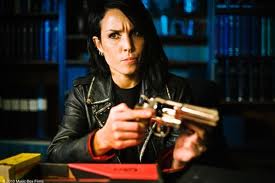
2/22/11.  Mark the date on your calendar, smart phone, Mayan stone disc thing -- whatever you got.  That's the day you can get your hands on Stieg Larsson's Dragon Tattoo Trilogy.  If you're waiting for the Hollywood remakes, you're an idiot.  These are the films to see.  My reviews of the films will be on Film Threat (I have my review of The Girl With the Dragon Tattoo there with the rest to follow).  What makes this boxed set so special is the fourth disc.  (And no, this is not the mysterious fourth movie based on the rumored fourth book, but that is talked about on this disc.)

The bonus disc is one of the few that really is a bonus for fans of this trilogy (which at this point is just about everyone and their mothers).  You get a documentary that looks at Larsson's life, death, that fourth manuscript, neo-Nazis and just about everything else you can imagine.  (You'll also be amazed at how much his father and brother look like him.)  Also included are two very fascinating interviews with Noomi Rapace and Michael Nyqvist.  Those three things alone would make the boxed set worth getting, but then there are interviews with other cast and crew and the staging of a fight scene, which makes this thing top out at just over the two hour mark.  Music Box Films has, again, scored a coup with this one.

If you haven't bought the other three films, this is going to be mandatory.  The documentary on Larsson is spectacular and goes in-depth with the people behind Expo and the books.  Of course, some of you may have already purchased the films not knowing this set was coming out.  Those make great gifts, as you simply have to watch this bonus disc.  (My screener copy actually had a glitch which made about ten minutes of the documentary unwatchable, but I still enjoyed it.  Normally that would drive me up a wall, but I actually made my DVD player strain trying to take in every word I could make out.)

Again, don't wait for the (most assuredly watered down) Hollywood remakes.  Go right to the source.  In just a few days you will have an incredibly in-depth look as to why this is literally a global phenomenon.

Blog Photo Updated

If you like it (and I do), give Felix Vasquez, Jr. all the credit.  While you're at it, be sure to visit his site, Cinema Crazed.  You'll be glad you did.  Thank you, Felix.

Wednesday, February 2, 2011

The Woman

The Woman is getting some strong press out of Sundance and causing some equally strong reactions from its audience.  Hype?  Maybe.  Worth checking out?  I will be.  That's not issue, though.  What I do find interesting is that people are saying it degrades women (I haven't seen it, but I have faith in Lucky McKee (who directed) and Jack Ketchum (who wrote the book it is based on) to make sure that it is far beyond a mere piece of degradation.  Yes, the idea of a feral woman held captive by a family with a twisted patriarch who puts her through all kinds of abuse does cause one to take a few steps back, but degradation?  No, I'll leave that to Jersey Shore.

This also leaves an unasked, but equally important question: What's wrong with degradation?  Men have been degraded in film, but we usually look at that as though they had that coming to them.  (Think Hard Candy, which was an excellent movie.  Maybe he had some of that coming, but I urge you to rewatch it.  Did it have to go that far?  Was it warranted?)  Hostel is another one.  Why shouldn't there be some equality?  Playing devil's advocate here is easy: violence happens in real life more to women than men, so it shouldn't be seen on screen.  I don't agree with that, as in art anything goes, but I do think this leads to why we have such a visceral reaction to it on screen.

Violence against men in cinema is often justified, acceptable and sometimes even funny.  When it is done against women, however, we tend to extend our sympathies and get enraged (watch the footage of the man escorted out of a showing of The Woman to see that in full effect).  Because we often see them as victims in real life, we can more easily relate to them as victims on screen.  It makes the story more compelling, and that is something art should strive for.  (By comparison, Haute Tension takes its female lead and makes her a hero that goes through some pretty rough stuff and eventually makes her a nasty villain, but the audience can forgive all that because she is ape shit crazy.  If that had been a male in the lead role, the audience would have wanted him to suffer at the end.)

I'm sure The Woman is not meant to be a study of degradation, but that of power.  Who really has power in a realtionship?  How far can you push things before they push back?  Is violence justified in confronting violence?  Important questions, and from the reviews I've read, this film investigates them.  Yeah, it could have been a male that was captured and abused, but let's face it -- would you want to see that and, more importantly, would this even be an issue?  Hardly.  It wouldn't even be a blip on the radar.

So, who's the real sexist here?

Sunday, January 16, 2011

To the Devil, A Son

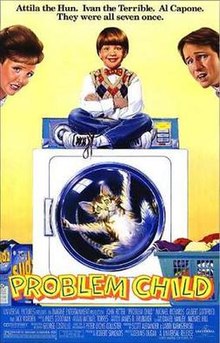
A serial killer.  Arson.  Just-released-from-prison-after-15-years-sex.  Child abandonment.  The near murder of a child by his adoptive father.  Animal torture.  An unethical child welfare system.  Kidnapping.  If all these things exist in a film it must be the 1990 family feature Problem Child starring John Ritter, Michael Richards, Jack Ward, Gilbert Gottfried, and Michael Oliver as the title seven-year-old who excels at violence.  I kid you not when I mention those things.  They are all in the film.

The film was not a critical success, though it did debut at number three in the box office, spawn two sequels (that's two more than Citizen Kane), and an animated series (one more than Citizen Kane).  Not bad for something that wasn't screened for critics (a common practice for movies considered so bad that they won't pass the intensely critical eye of the A&E editor from a Wyoming newspaper).

Problem Child was rated PG, so you can imagine that the serial killer stuff and John Ritter going to murder his child are played for laughs, but those concepts are there nonetheless, and it all makes for a fairly dark film if you are to take it seriously.  The plot involves a family that is duped into adopting a little boy who is nothing but a problem.  He causes mass destruction, hurts animals, and sets things on fire.  One can only imagine what he'd do when that erection would start to mean something.  He also starts a pen pal relationship with a serial killer, who breaks out of prison to visit him (and later kidnaps him and his adoptive mother after he has sex with her on the kitchen floor).  Disney this ain't.

Taken at face value, this film is kind of bold in its absolute commitment to bad taste.  There are some gags that are actually funny, too, but as a comedy the whole thing kind of fails.  (Though to be fair, a kid will probably like this and not get the entire underlying dark theme.)  As a family film, it fails.  Had the comedy been toned, though, it would've made a passable thriller.  Watching it, I did not view it as a comedy.  Instead, I looked at it as if it were real, and it comes out pretty damn disturbing.

I haven't seen the sequels, and I barely remember seeing commercials for the animated series.  I can't imagine any of them being as twisted as the first film, however.  That kind of magic really only comes around once ... and in this case it has happened by what I can only assume is a mistake or a really long lapse in sound judgment.  (Considering that the director went on to do Beverly Hills Ninja I think it is safe to say it is a mistake.)  If they do keep up with this film's theme, though, I will declare it as the most subversive family film franchise in cinematic history.

Wednesday, January 12, 2011

Entering the Void

As I was sick yesterday, I thought it would be a good time to do some comparison shopping on Enter the Void, due out 1/25/11.  I started, leaving Amazon for last, but in the meantime Amazon actually sent out one of those pre-order e-mails I rarely pay any attention to.  $14.99 for 160 minutes of non-stop, trippy Noe?  Throw one of the many books from my wish list on there and get free shipping?  Done.  I'm not the biggest fan of Amazon, but I do love seeing those boxes. 

The lights will be off that day.  The sound system in full effect.  Perhaps I'll abstain until the weekend and make it a Noe weekend with I Stand Alone and Irreversible bookending it.  (The Girl Who Kicked the Hornet's Nest comes out the same day.  I may be getting that to review.)  The rest of you may be waiting for Red and Secretariat with the same sense of anticipation, but I think I can safely guarantee that at the end of the day, after watching the film, I'll be far more satisfied.

Tuesday, January 11, 2011

The Devil's Rain

2:56 a.m. I awaken to massive stomach cramps.  I have been sick since Sunday night.  Slightly alarming, but I think it is something I ate.  (Organic mushrooms, perhaps?)  As I lay in bed, my head started to do its usual spin of thoughts and I suddenly remembered The Devil's Rain.  Maybe it was because I mentioned it to Girl during our Machete viewing session.  Maybe it was because I find the movie incredible in its own way.  May I was delirious with sickness.  Either way, I think this movie deserves at least one viewing from fans of bad cinema.  Not that it's horrible.  Well, it is horrible, actually, but in a way that only Seventies films can be.

1975.  Having John Travolta, Tom Skerritt, Eddie Albert, William Shatner and Ernest Borgnine together in a film where Anton LaVey served as an advisor can only mean it's going to be mesmerizing in some sense ... and it was, but not because of anything good.

The plot exists on the head of a pin and consists of a family curse and the usual Satan worshipping nonsense that was popular in that time period.  Perhaps it was there to serve as a recruiting tool for the Church of Satan (of which Travolta later became a part of).  Maybe it was an attempt to catch in on Borgnine's superstar power.  The cast of characters, in an act of symbolism for the plot, end the film by melting in the rain.

Simply amazing.

If this movie had a different cast, it would not even be worth noting.  The cast, however, makes this thing an object of magic.  How these people were convinced to be in the same film together is beyond me (except that maybe they all needed the money, and Travolta wasn't a household name yet), but it seems like there would've been too many egos involved.  What do I know, though?  I was four when it came out, and I don't even remember seeing trailers for it.  I came across it when I read about it and then caught it about a year later.

Why I thought of this in the wee hours of the morning is still a mystery to me.  I'm glad I did, though.  I'm going to lay down this morning, try to get better, and see if I can stream this thing through Netflix.  I think it's time to revisit the great Satanic Beast.  And I so wanna see Borgnine melt.

Saturday, January 8, 2011

Enter the Void

Enter the Void, director Gaspar Noe's latest, is due out on DVD later this month.  I am a big fan of Noe, which means I'm salivating like a dog looking at a fresh leg to hump.  I expect great things from the man, and I have yet to be disappointed. 

The film never made it to my local theatre.  That is chiefly because a few years ago a new company bought it (based out of Oregon) with the motto of money first, art later.  We did, however, get The A-Team.  I didn't even see that the "good" theatre in Arcata got it.  I was invited down to Santa Cruz to take in a show, but timing didn't work out on that, though I believe it must have been spectacular on the big screen.

The usual outlets (Amazon and Diabolik) will have it, and I hear there are two different running lengths available, with the longer being the drug of choice in this case.  That makes it easily obtainable, but still frustrating for someone who wanted to see it as it should be seen.  I can't help but be a bit bitter thinking fans of things like Season of the Witch and Little Fockers never have this problem.

I will, of course, be adding this my collection.  I have considered buying a Blu Ray player specifically for this purpose, and may still do it.  It is that important to me.  Had our local theatre, Coming Attractions, the one where hot dogs look old and the staff barely pays attention to whatever you are saying, shown it, my money would've went there instead.  Coming Attractions, which goes out of its way on its site to link itself to the "acclaimed Oregon Shakespeare Festival by birthplace alone (an act of irony lost on anyone anxiously awaiting The Dilemma, has made it perfectly clear: the rabble is what it is after.  All the rest can go buy Blu Ray players.

Wednesday, January 5, 2011

Important News for Stieg Larsson Fans


I received an e-mail today that Stieg Larsson's Dragon Tattoo Trilogy is having its street date moved. It is now due out 2/22/11. It's going to be a four disc set (regular DVD or Blu Ray -- I wish I had a Blu Ray player at this point), with some nifty extras.

Of course, these films are being remade for American audiences, so you may want to get this before all that is good about this series is destroyed by Hollywood. It will retail for $59.95 for the regular DVD set and $79.95 for Blu Ray. I'd run the Amazon ad with this post, but Blogger is having all kinds of difficulties tonight, and it's been a pain in the arse just to get this posting up.

I'm recommending this one big time. It's got the original films, a documentary and a bunch of interviews. February is going to be a good month.

Saturday, December 25, 2010

Too Much To Take

Like everything director Takashi Miike does, Imprint leaves an impression.  Originally created for the Showtime series Masters of Horror, Imprint never saw the light of day on that network due to it being too disturbing.  Mick Garris, the series' creator had asked Miike to tone it down before Showtime saw it.  I like Garris, and when he is asking a director to tone something down, there is probably a reason.  I never felt, however, that the Masters of Horror series was all that controversial in nature, so I took the stories of Imprint's fright factor with a grain of salt. 

After watching it, I can understand why Showtime wouldn't air it.  If I had to put my finger on it, I would say it is the copious amounts of aborted fetuses that had something to do with, and not the torture scene (though that was pretty chilling).

Watching Imprint is kind of like watching a nightmare unfold.  The acting is sometimes over the top.  The visual aspects of the story seem off-kilter (one of the main complaints about it that I've heard from people is that they can't tell what time period the story is supposed to be set in -- it looks like it is older, current and slightly in the future all at once).  And the narrative is erratic in places.  It works as a disturbing tale, and its conclusion is open to interpretation, but I must say I find Audition to be more cohesive and enjoyable.

Miike is a director who is no stranger to controversy.  People have called his work overly violent, but I think it is something far more powerful than that.  His use of violence is almost poetic.  He doesn't use the hack-and-slash route many American directors go for.  He is more subtle.  Because of that, he is more effective.  People can watch Jason Voorhees cleave someone with a machete and say, "Damn, that was bad ass."  But make that same person watch the torture scene from Imprint were burning incense is applied to a woman's armpits and you can physically feel that work.  There is far less blood involved, and incense is no machete, but the effect on the viewer is far stronger than most things that come out of America.  This is, however, not a cultural difference.  It is a difference of direction and artistic vision.  Miike wants every scene to have a specific impact.  Your standard director just wants the blood to flow.

Imprint may have been too much for Showtime's perceived audience (though I doubt the  network would have received as many complaints as it thinks), but it can be seen on DVD and through Netflix streaming.  It may not be a Christmas movie, but it sure as hell beats the NBA or whatever other shit is playing.

Thursday, December 9, 2010

Crime Pays

I received The Sicilian Girl to review and actually got to sit down and do so the other night.  I can't go too heavily into the film here, as I am revieiwng it for Film Threat, but I can at least comment on its genre: the crime film. 

(Actually, this is more like a bio pic set in the happy-go-lucky world of the Mafia, but chances are viewers are watching it because of the crime element.)

Crime films tend to be insanely popular.  Especially when it comes to films that focus on the Mafia.  Maybe it's the Mafia's values or audiences living vicariously through the characters on the screen.  Either way, the idea of organized crime captures the movie audiences' attention just as well as a loud explosion or a "really cool car chase."  Unlike those two things, however, the crime film doesn't just capture the attention of the easily distracted.  It captures minds across the vast demographic ocean. 

It's not just our fictions, either.  Americans, and I suspect it is true in other countries as well, love their crime in real life.  Mr. Simpson.  Dahmer.  Gotti.  Manson.  Cooper.  We follow news coverage.  In fact, for some that is the only news they follow.  It would appear that we are kind of sick to be fascinated by such things.  I am fascinated by it (in particular, serial killers).  I enjoy the fictional stories and the real coverage, and I think I may have pinpointed one of the reasons why these stories are so popular.

As a culture, we relate to one another on some level.  Very few of us feel so vastly isolated that we can't find some common ground (and those who do often become the type of person we watch a movie about).  So when we see a film about a "criminal," we, actively or inactively, try to relate.  We look at the choices they make and, if the filmmaker did his or her job correctly, we can understand them.  And then we look at ourselves and think about the choices we'd make in such a situation.  High road or low road?  Risk getting caught?  Going out with a bang, or turning snitch?  One last drug deal because the cops are closing in and it will give us enough to get to Mexico?  Stop choking the person at the last minute and try to start over with life?  We like to put ourselves in their shoes.  We like the idea of justice, but we also like the idea of sticking it to The Man.  It's our last bit of rugged individualism ... even if it's in a crowded theatre with like-minded people.

We are fascinated with criminals because they are fascinating.

One of my favorite crime movies is The Krays, a wonderfully shot and acted story of twin brother gangsters that is as brutal as it is touching.  It involves a world (British organized crime) that I have little connection with despite the fact that it is based on a true story.  It involves people who were rarely mentioned here in America.  It has values I don't normally subscribe to.  In other words, on a surface level I have nothing to relate to in this film.  I can't help, however, but loving the Krays' descent into humble psychosis, and though their world is as foreign to me as that of a goat herder, I can't turn away.  I can't help but understand them and actually have some empathy for them.  The crime film once again works because it appeals to the human in us all. 

Romantic comedies, and their sappy way of looking at the world, only connect with a certain segment of the crowd.  Science fiction films, by their very nature, alienate another segment, as do horror movies, even if they are about the human condition.  Westerns have the same shortfall.  In fact, most genre films alienate ... except the crime film.  Instead of getting a certain amount of strength from alienation (something that can actually reinforce a genre film as they have their own rules to live by that don't have to be gone over with every new film), they get their power by inclusion.

These are powerful films in ways we probably don't even understand.  Like all worthy art they make us examine things in our own lives, and in that way influence how we learn about the world around us. 

Darth Vader may be film's most famous villain, but it is far easier to relate to Dillinger and Bonnie and Clyde.

Tuesday, November 16, 2010

Eaten Alive

Tobe Hooper?  Check.  Crazy-ass redneck in Louisiana?  Check.  A man-eating crocodile/  Check.  Country music playing from a crappy radio?  Check.  Bare breasts?  Check.  It must be Eaten Alive.  It's had about 800 different names.  Regardless, it's an underrated film that apparently has a fan in Quentin Tarantino (compare the dialogue in Kill Bill Vol. 1 that Tarantino has his would-be rapist say with Robert Englund's character's dialogue in Hooper's film).

This is, of course, not my favorite Hooper film.  That would be The Texas Chain Saw Massacre.  Both films do have similar themes, though Eaten Alive is nowhere near as nihilistic as the classic.  (Marilyn Burns stars in both films, too, and both were loosely inspired by real people.)  Texas ..., it should be noted, has won a place not only in horror film history, but has also earned its place in cinema history.  Eaten Alive, however, never got the same amount of respect.  That doesn't mean it should be dismissed.


Texas ..., as anyone who has seen it knows, is a brutal, nihilistic (there's that word again) ride where the tension builds until the film's terrifying conclusion -- the cinematic equivalent of being beaten.  It is infamous for its depravity and gore, though those who have seen it know there is very little gore to be found. 

Eaten Alive tries to capture lightning in a bottle a second time, but it doesn't quite work.  There is more humor. The screen's villain isn't anywhere near as menacing as the family in Texas, and the depravity doesn't come close to what Hooper's audience was used to based on his previous film.

There is a creep factor to the film, though, that can't be denied, and when a little girl is terrorized you can see some of that Hooper sensibility come out.  It's not quite as bad as the cannibalistic dinner scene from Texas ..., which came out in 1974 (three years prior to Eaten Alive), but it is still a nail biter. 

When you think about it, Eaten Alive could only disappoint fans of Hooper's first film.  There was no way it could really be on par with it.  What film could?  Whatever he could've created could only be met with a shrug.  Considering that, it's actually quite surprising that Eaten Alive isn't a total failure.

I used to question whether or not anyone would even care about or remember this film if Hooper's name weren't attached.  Watching with an objective eye, however, reveals a work that serves as a nice transition piece between the director's first film and some of the stuff that followed (The Funhouse and Poltergeist are two that come to mind that are far from the savagery of Texas ... but still share some common bonds with Eaten Alive like children in danger and villains from the outskirts of mainstream culture).  It will never be as influential as Texas ..., but it is respectable in its own right.

Friday, October 29, 2010

The Hollywood Dinosaurs

I'm currently working on a review of Dinosaur Valley Girls for Film Threat.  This Donald F. Glut vehicle (yes, that Donald F. Glut) came out as a two-disc set earlier this year.  It's available from Frontline Films and, of course, Amazon.  I'm not going to go into the review here, because I'm saving that for Film Threat, but I want to make mention of what kind of movie it is.

As you can imagine by the title, this is a dinosaur/cavewoman movie that has its tongue wedged firmly in cheek.  It's the kind of movie that you don't see in theatres anymore.  Some may be thankful for that.  Others, like myself, would prefer to see this over any of the feel-good crap that Hollywood shits out every few months.

Hollywood is driven by profit.  I don't think that's a controversial statement.  Movies like Dinosaur Valley Girls don't earn the kind of profit as Eat, Pray, Love.  Conversely, they don't cost as much to make, either.  Couple this lack of profit with the fact that there are far too many chain theatres all showing the same film, and you can start to see why public showings of such fare have gone the way of the (ahem) dinosaur.  There just isn't money in it.

Normally I'd argue the point that we are missing out on some great art because the smaller, lesser-known pictures don't get a chance to be seen by the masses.  I can't argue that here.  This film isn't art.  It's not meant to be.  It's meant to be entertainment, and when low-budget entertainment can't even get major screenings, some of the magic of movies is lost.

It's been debated that audiences are more sophisticated these days.  They won't tolerate these low-budget USA network-type fare.  I can sort of see that, though I would state the only way audiences have become more sophisticated is when it comes to special effects.  Today's mass audiences won't tolerate cheap special effects, but they will tolerate the same ridiculous stories done with a higher budget.  In fact, they do it all the time.

I'll always value art over entertainment, and I won't make excuses for that.  Every once in a while I prefer some junk food, however.  Hell, I'd just settle for having the choice.  There's really no reason why a multiplex owned by whatever corporation can't devote some screen time in its smallest theatre to some cheap, on-the-fly lesser known movies.  They'll cost less to obtain, bring in some people who don't care for the latest big-budget nonsense.  The only way you can see these little films these days is in independent theatres, and far too many towns don't have those.